The lens that took the shot, printed on the shot
Camera marketing usually splits in two. There is the spec sheet, which means nothing to most buyers, and there is the aspirational photograph, which proves nothing because any camera could have taken it. Someone deciding between bodies wants the missing middle: what this kit produces, and what it took to get there. Three launches also had to run through one shell, in a market that reads in more than one language.
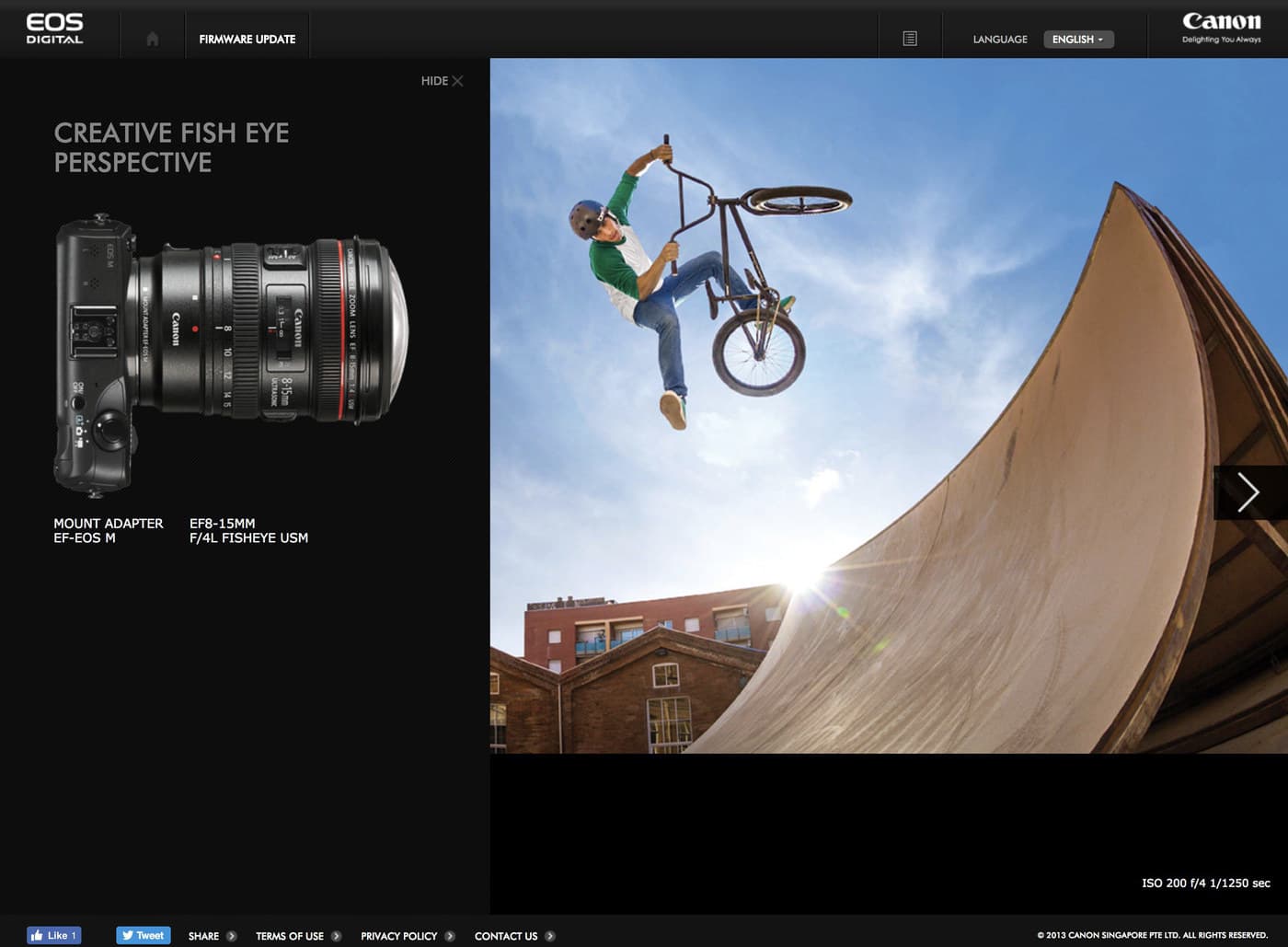
Every sample photograph captioned with the body, the lens and the adapter that produced it
Exposure printed on the image itself, ISO, aperture and shutter speed, so the shot is repeatable rather than admirable
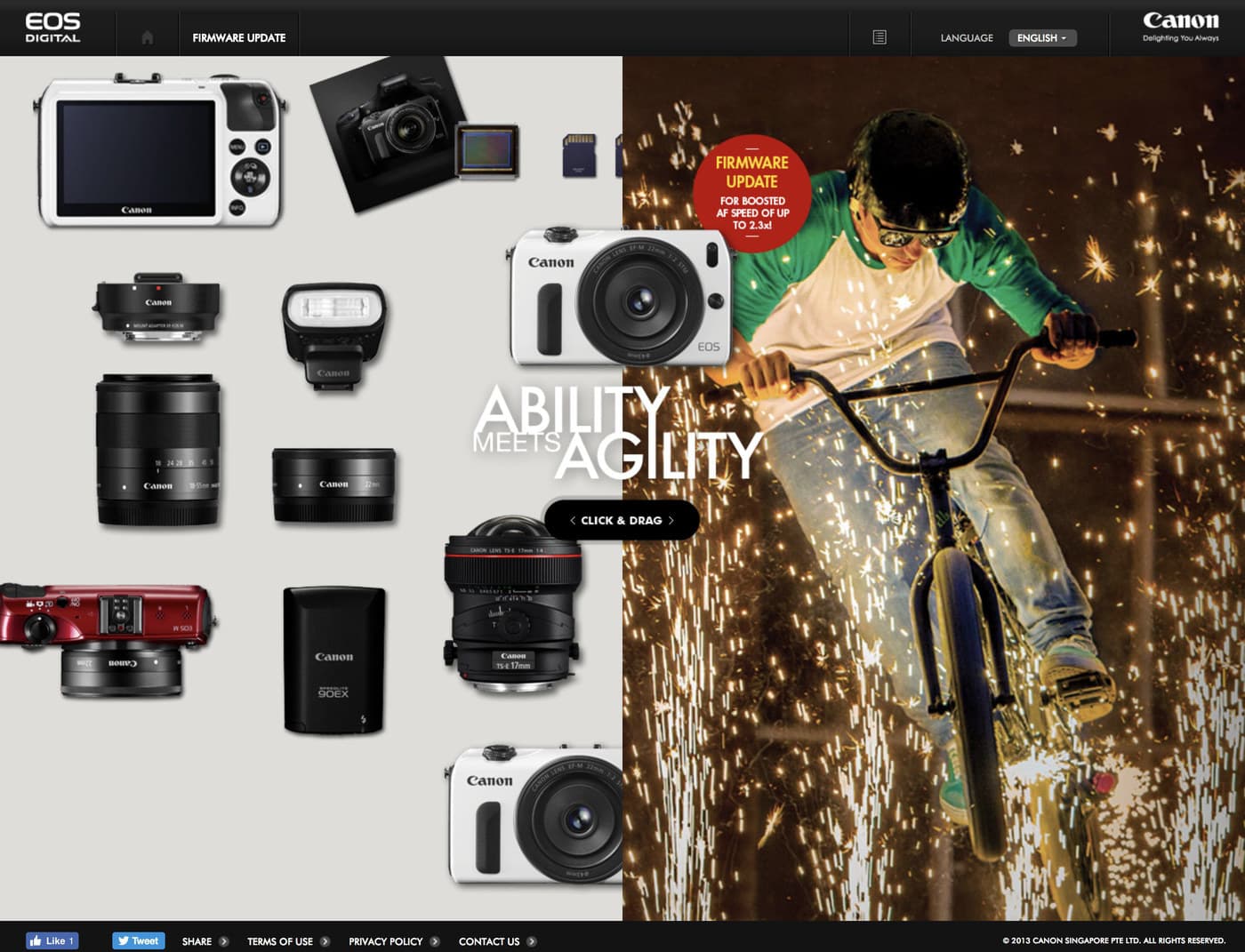
A draggable split on the EOS M site between the kit laid out flat and the photograph it took, so the two are never seen apart
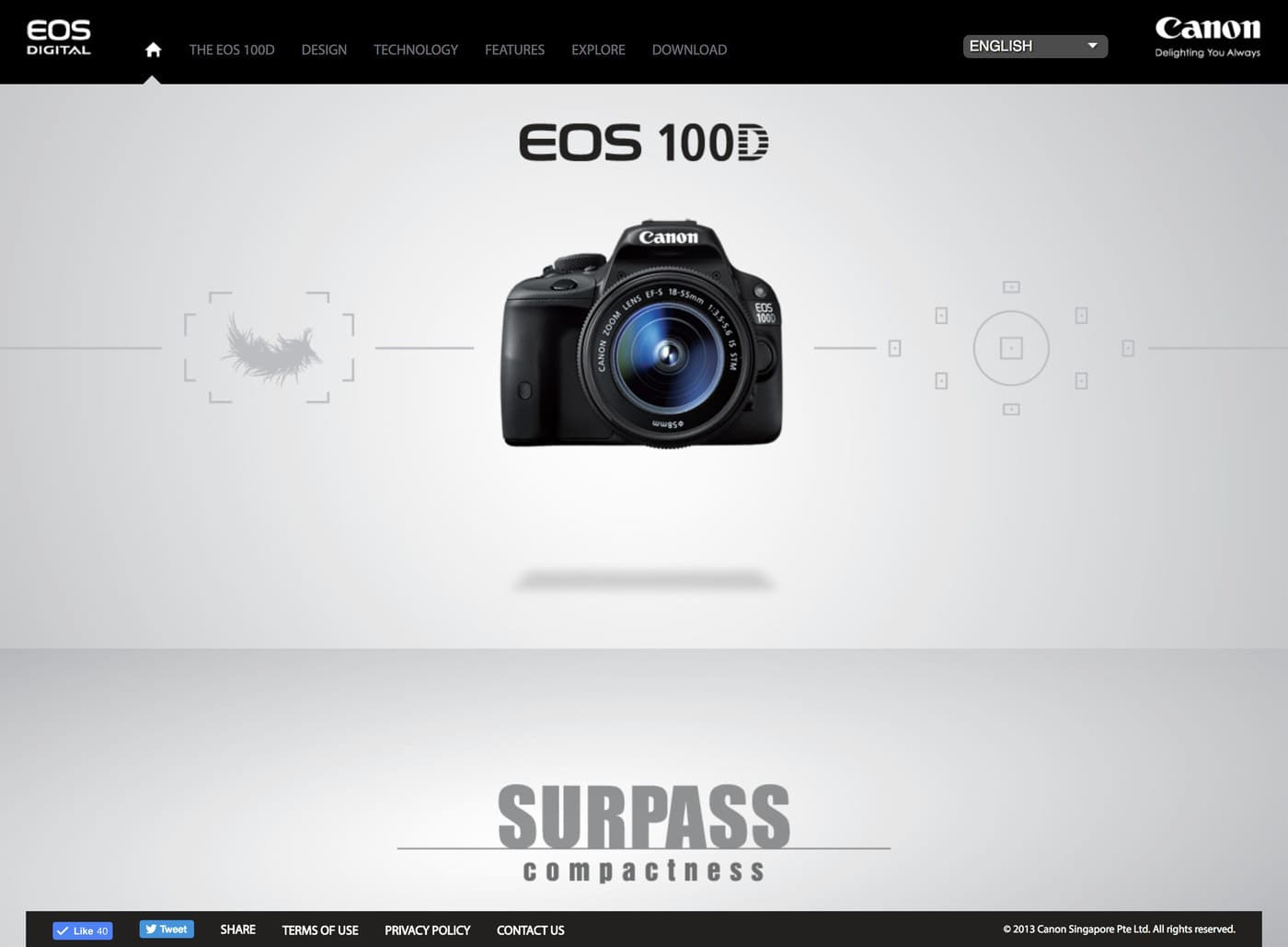
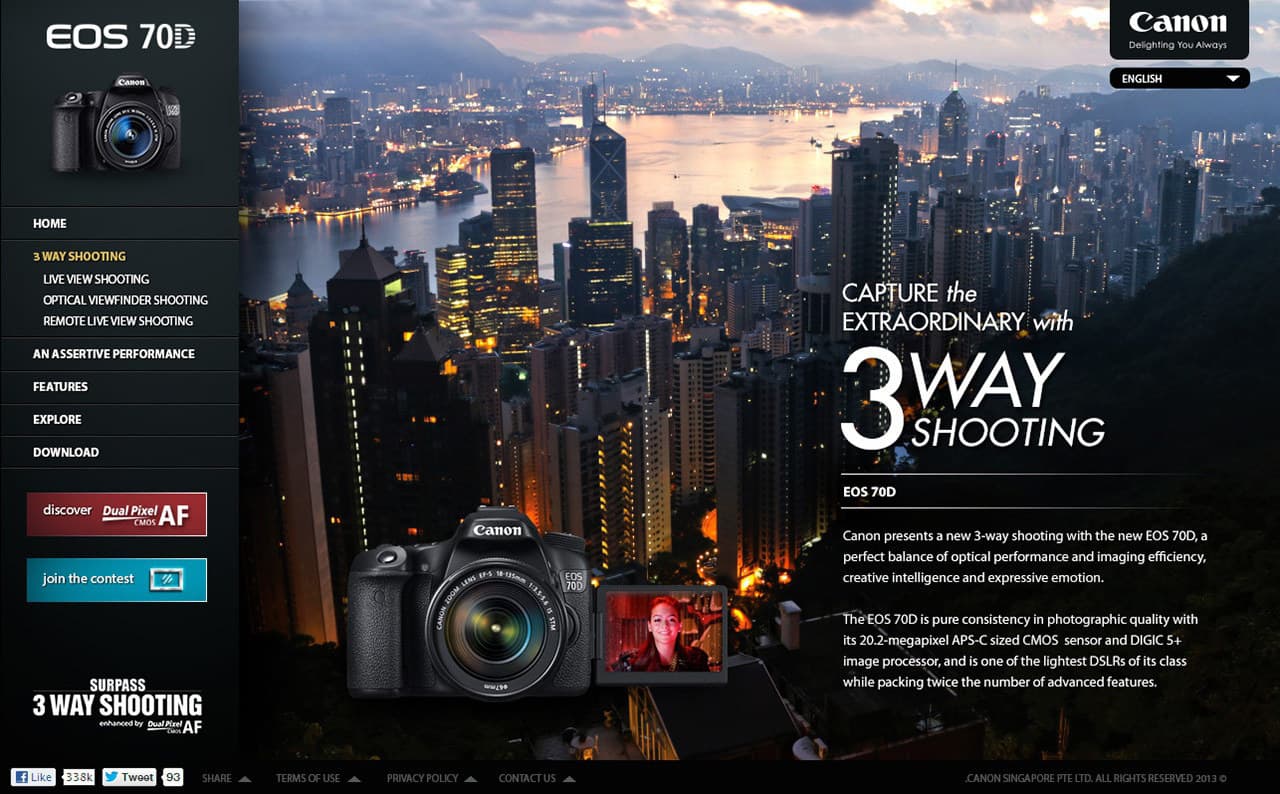
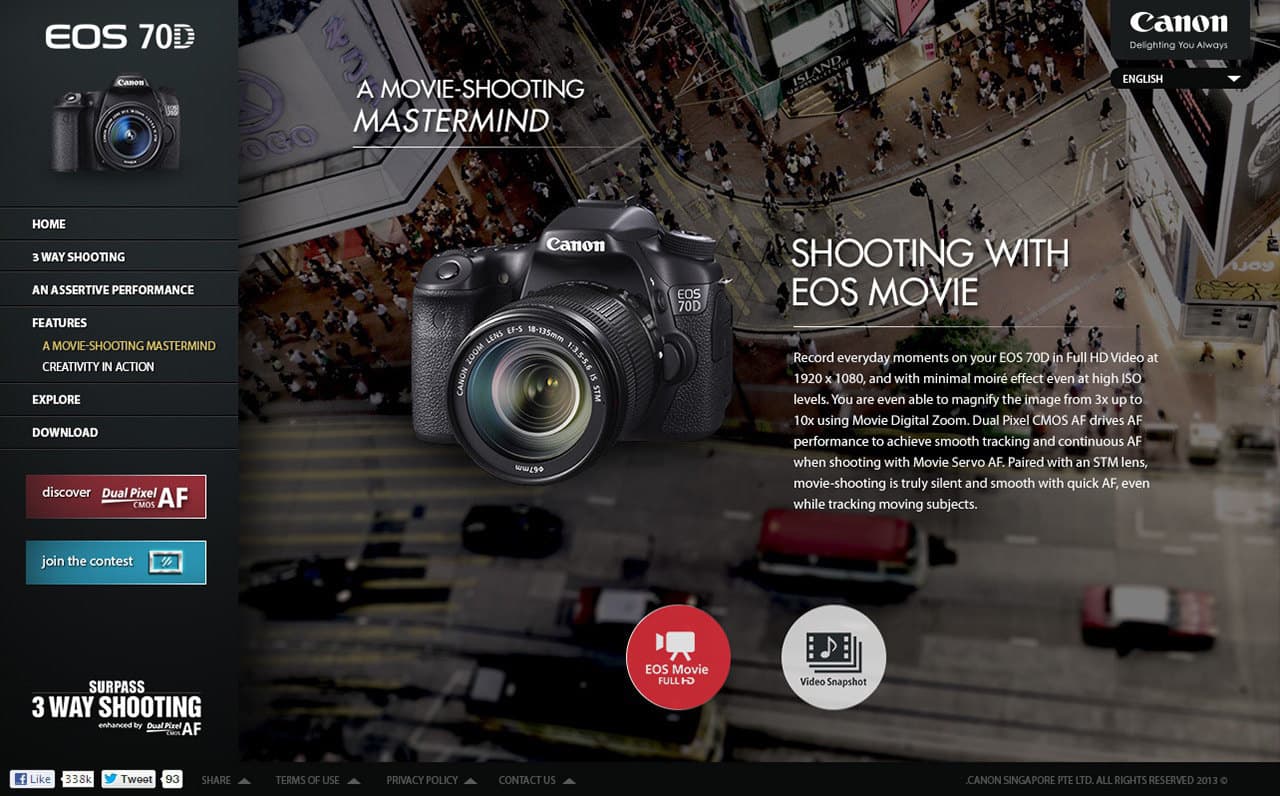
One shell across all three launches: the EOS Digital bar, the Canon mark, a language switch and a shared footer
Art direction changed per body inside that shell: light and weightless for the compact 100D, dark and high contrast for the EOS M
Firmware updates promoted in the navigation, because an owner returning to the site is looking for exactly that
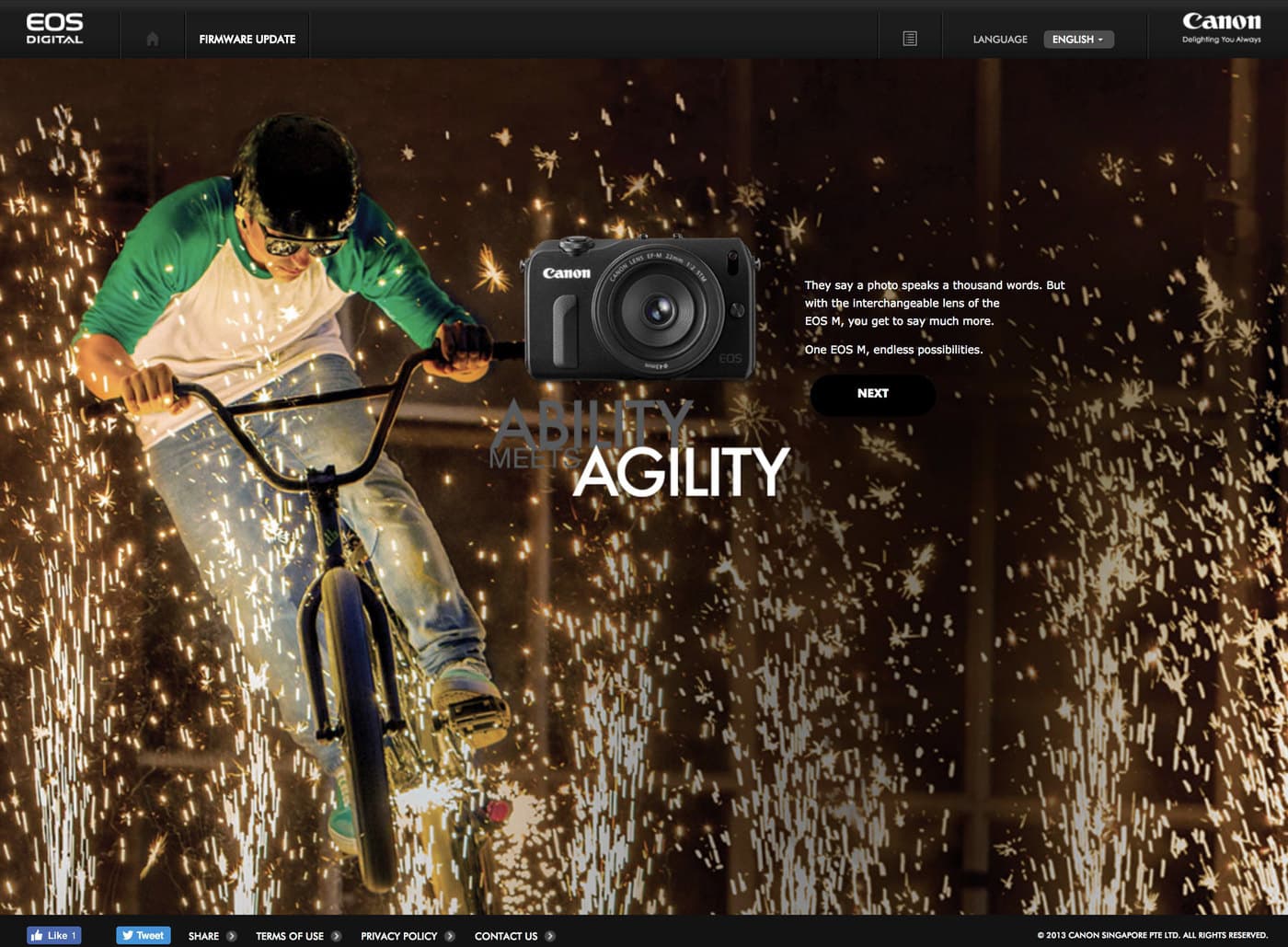
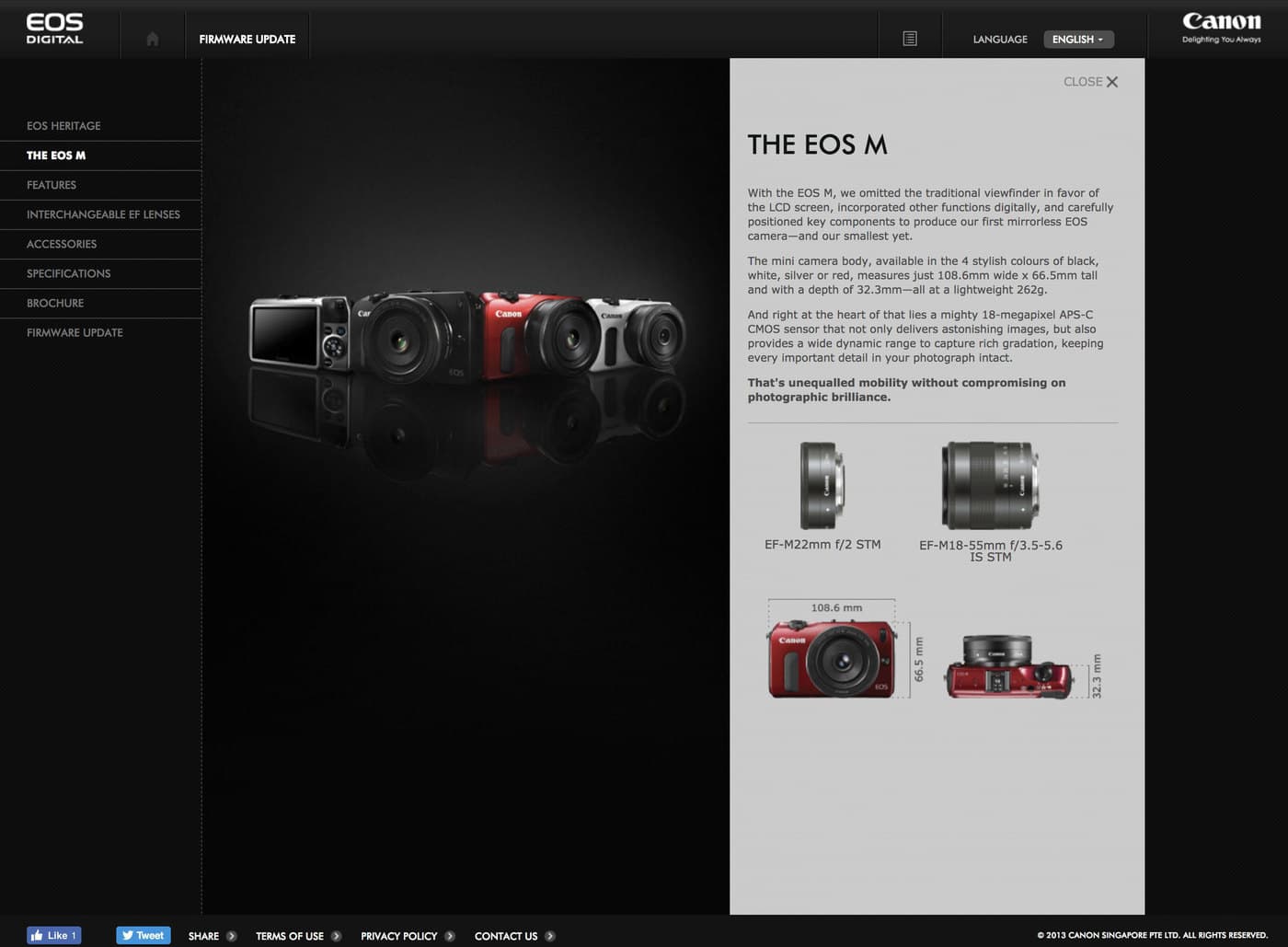
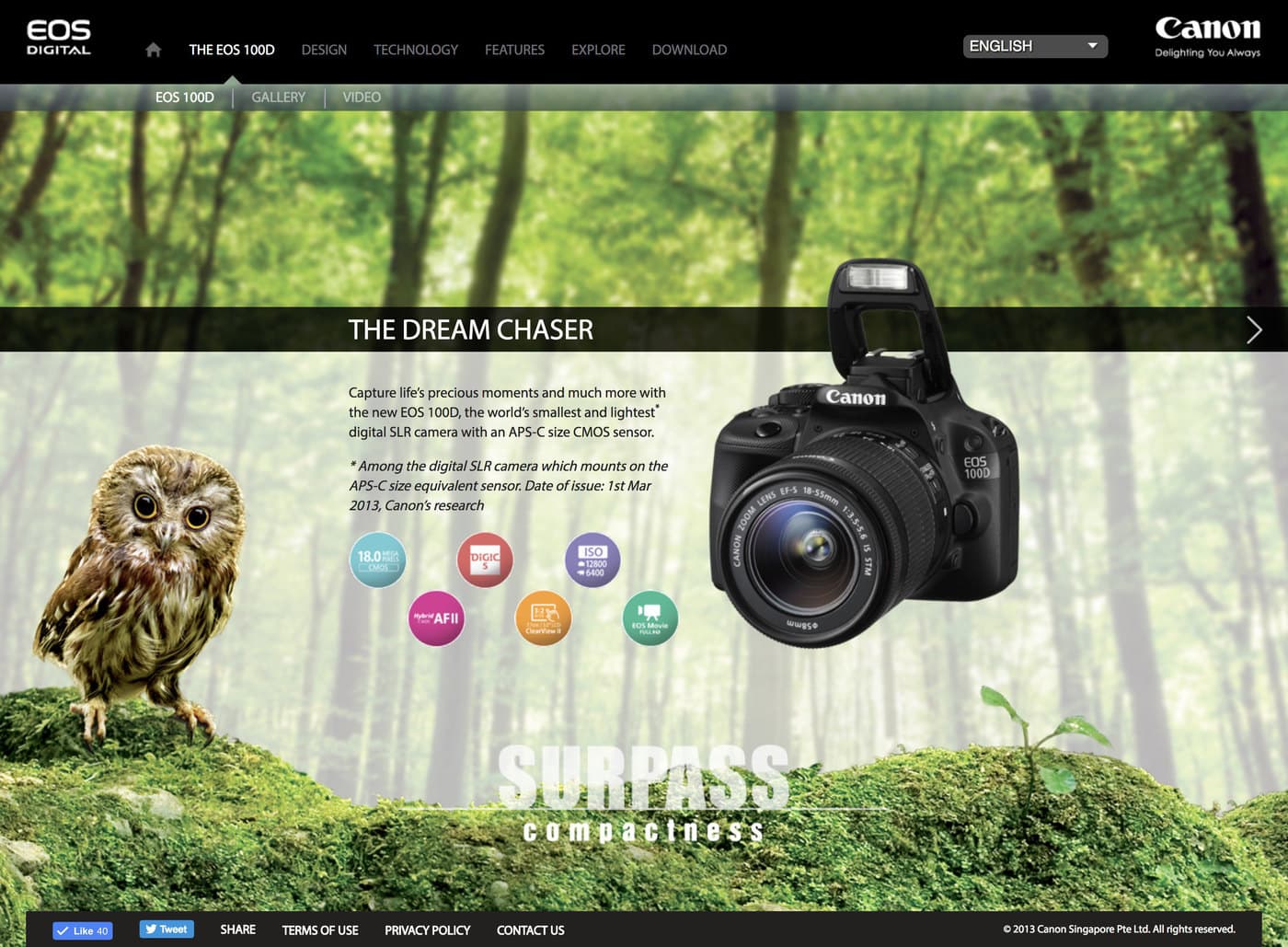
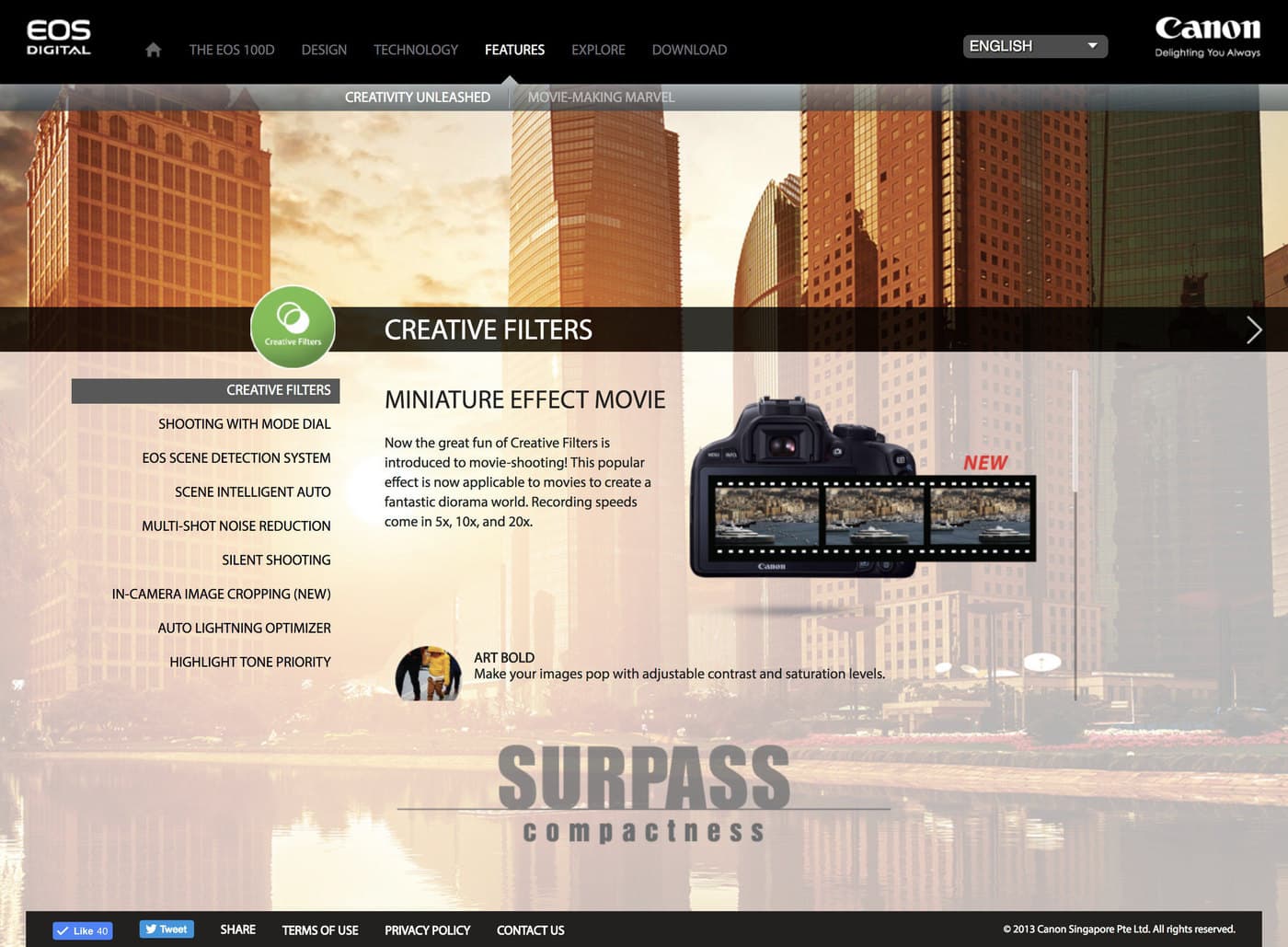
A buyer can see what a body and lens combination actually produces, with the settings that produced it
Three launches share a shell without looking like the same campaign three times
Owners and prospects are both served: one comes for firmware, the other for the photographs