Skip to content
Digitalmohawk

27 / Centacare Evolve Housing

When the right answer is a phone number

A tenancy site for Tasmania's largest community housing provider. It is built around the two things tenants arrive to do: understand their tenancy, and report a repair. The organisation now operates as Loreto Community Housing.

The brief

Tenants are allocated from the state waiting list. A failed heater or a broken lock is not an inconvenience for them. Two jobs dominate the site: reading your tenancy conditions, and reporting a repair. Both had to work on a phone, in a hurry, and sometimes in distress. The repair path also had to tell a real emergency from a dripping tap before anyone was left in a queue.


What we built

  1. 01

    The tenant handbook is searchable and organised by tenancy stage: before you move in, moving in, living in your home, moving out

  2. 02

    A staged repair report asks the triage questions up front, so a request arrives already classed as urgent, priority or non-priority

  3. 03

    On the urgent path the form stops. When the answers indicate danger it hands over the 24-hour phone number instead of taking a submission that would sit in a queue

  4. 04

    Access and safety conditions are asked at the point of entry, including whether an adult will be on site when a tradesperson attends

  5. 05

    A repair entry point held on every tenant page, because that is what most visits are for

  6. 06

    Property listings for homes in development, alongside the public news, donation and contact paths

Screens

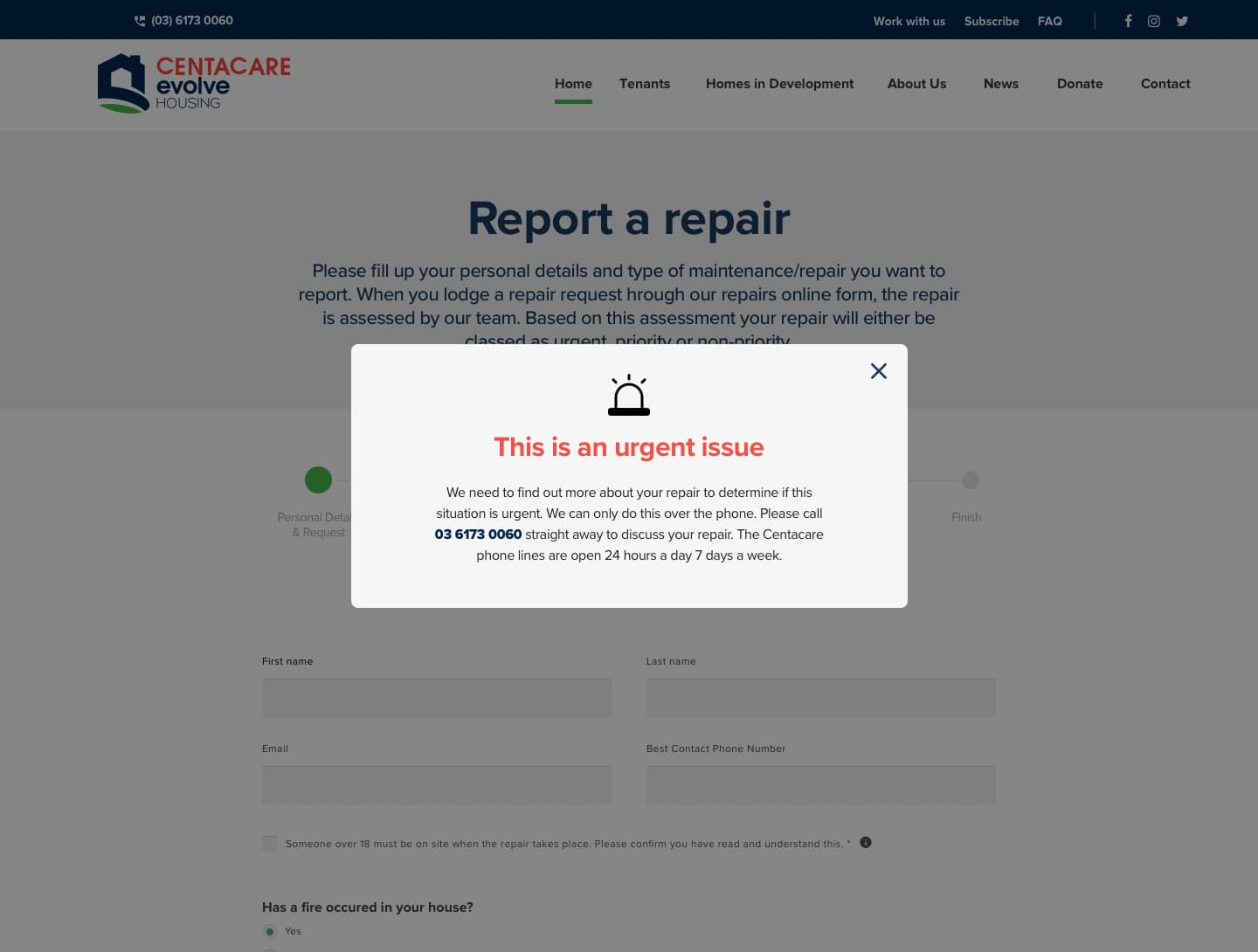
The Report a repair form, greyed out behind a dialog headed 'This is an urgent issue', which gives the 24-hour phone number and states the lines are open every day.
The interrupt. Answer that there has been a fire and the form stops accepting the report, greys itself out and hands over the 24-hour number. The submission a tenant would have waited on is never taken.
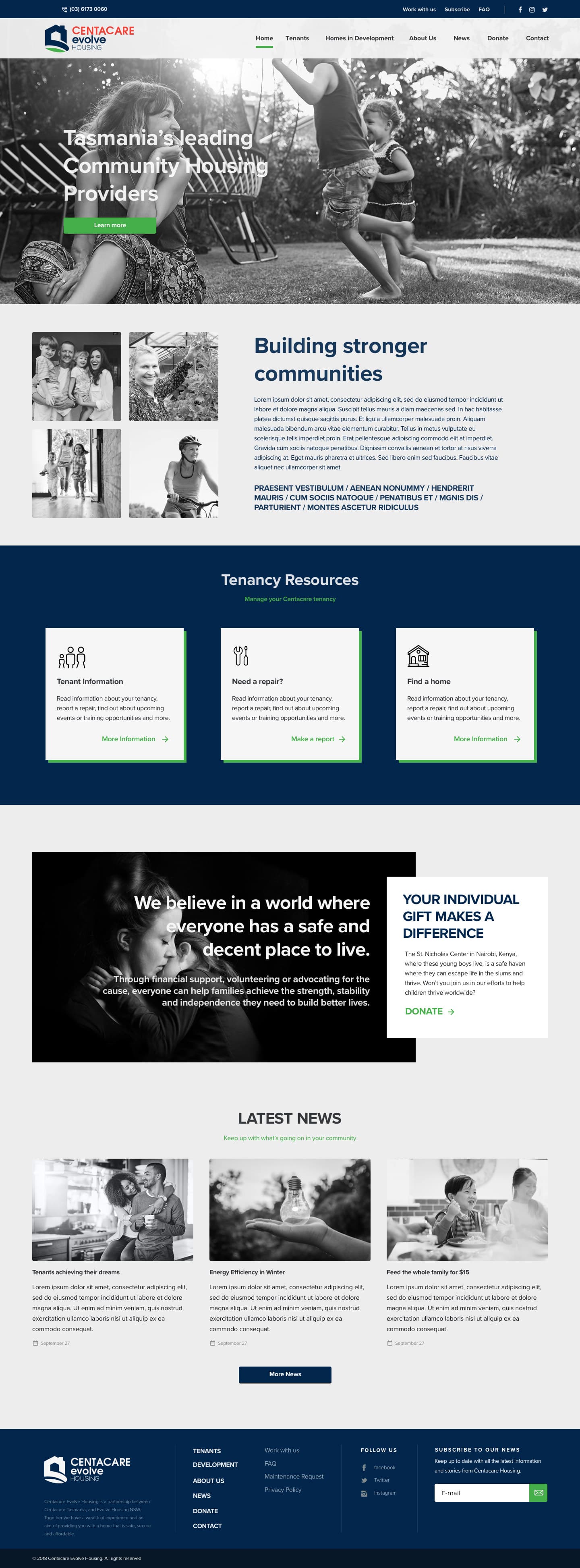
Centacare Evolve Housing homepage: a photograph of a family in a garden under the line 'Tasmania's leading Community Housing Providers', above three tenancy resource cards.
Tenancy resources sit directly under the fold: tenant information, report a repair, find a home, ahead of anything institutional.
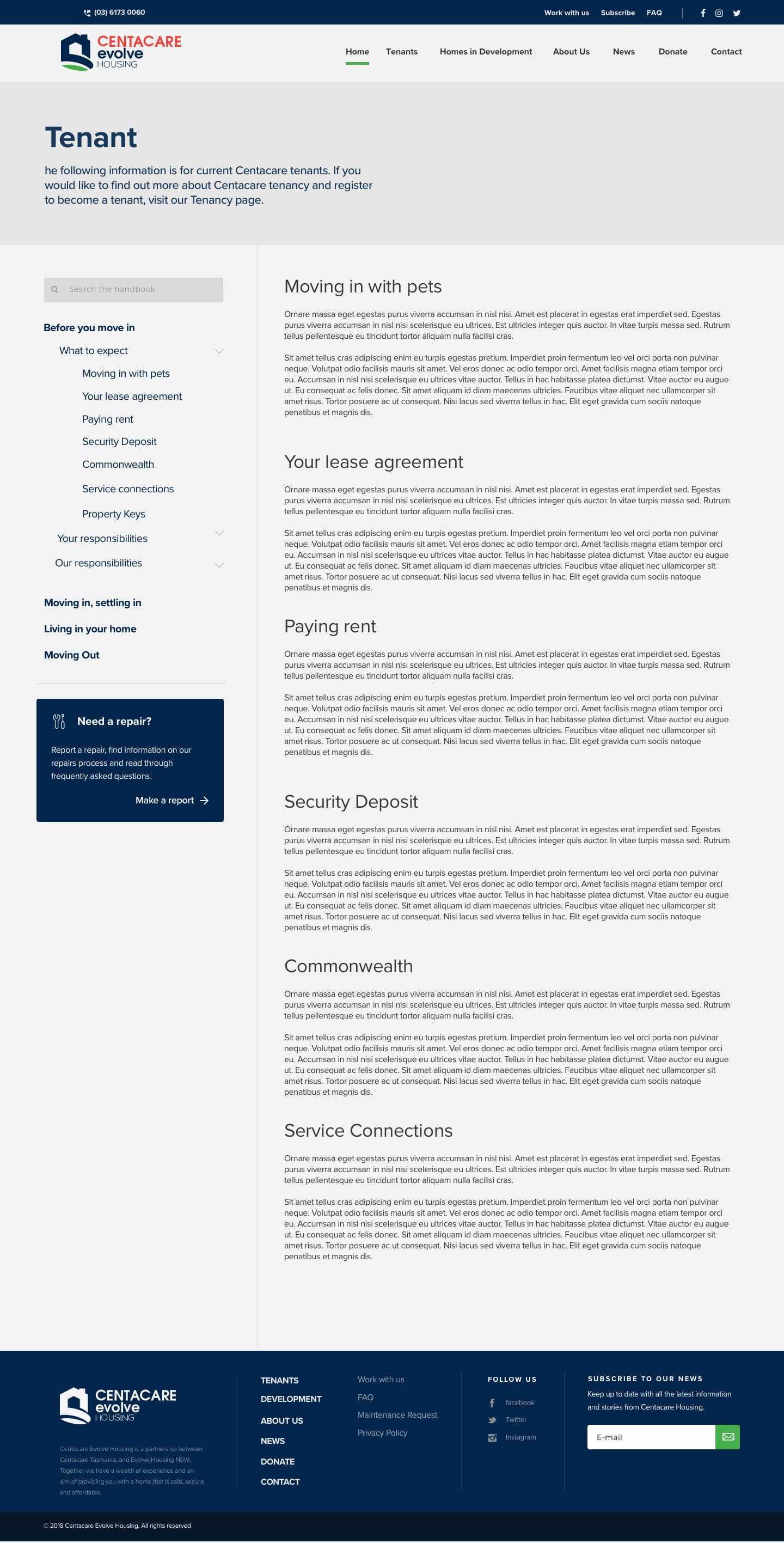
The tenant handbook page, with a search field and a contents list running from 'Before you move in' through to 'Moving Out', beside the handbook body copy.
The handbook, structured by tenancy stage and searchable in place. Previously the sort of thing that lives in a PDF.
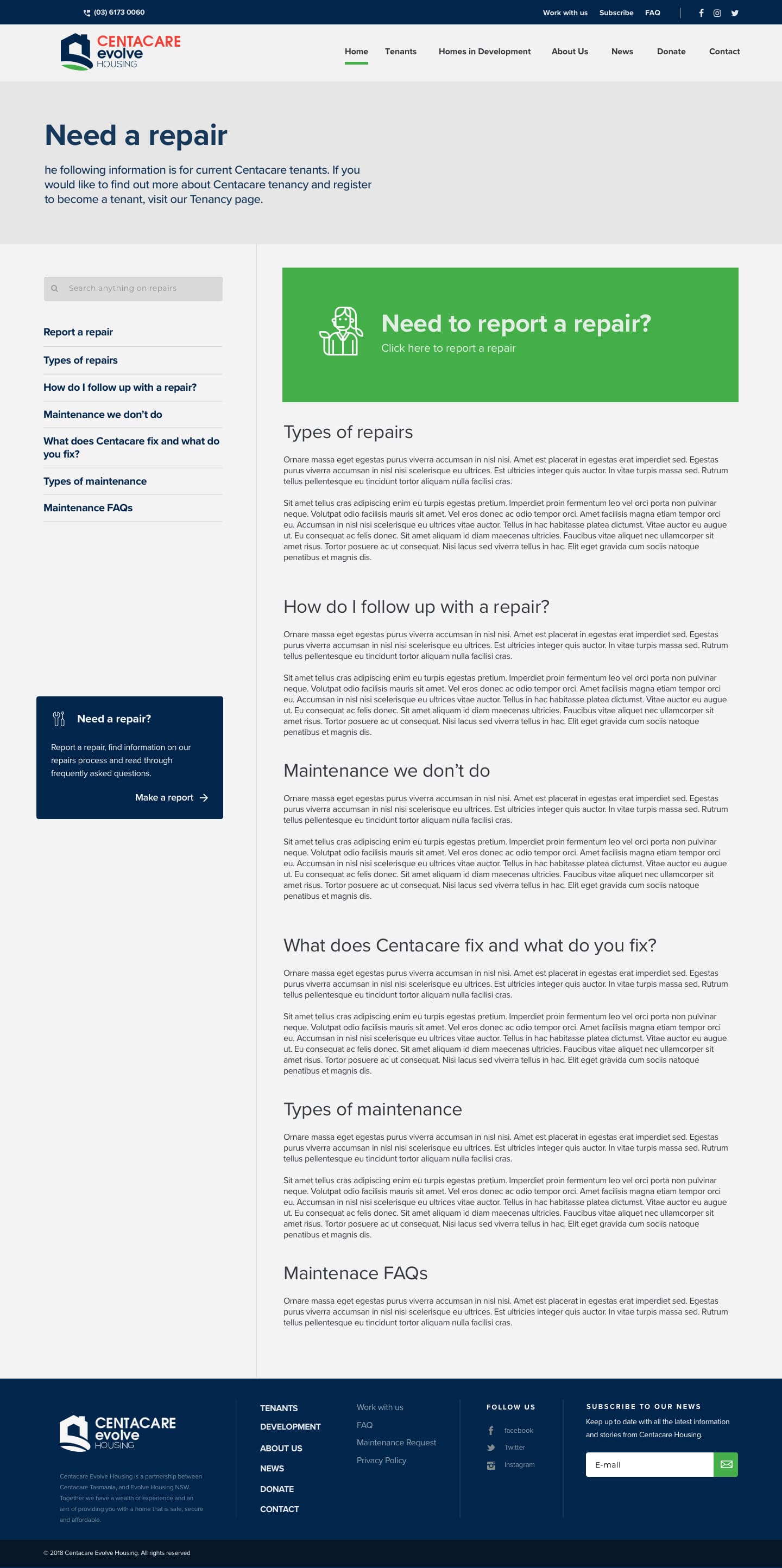
The Need a repair page, with a search field, a list of repair topics, and a green banner reading 'Need to report a repair? Click here to report a repair'.
Repairs answers what a tenant can fix, what Centacare fixes and how to follow up, with the report entry point held on screen throughout.
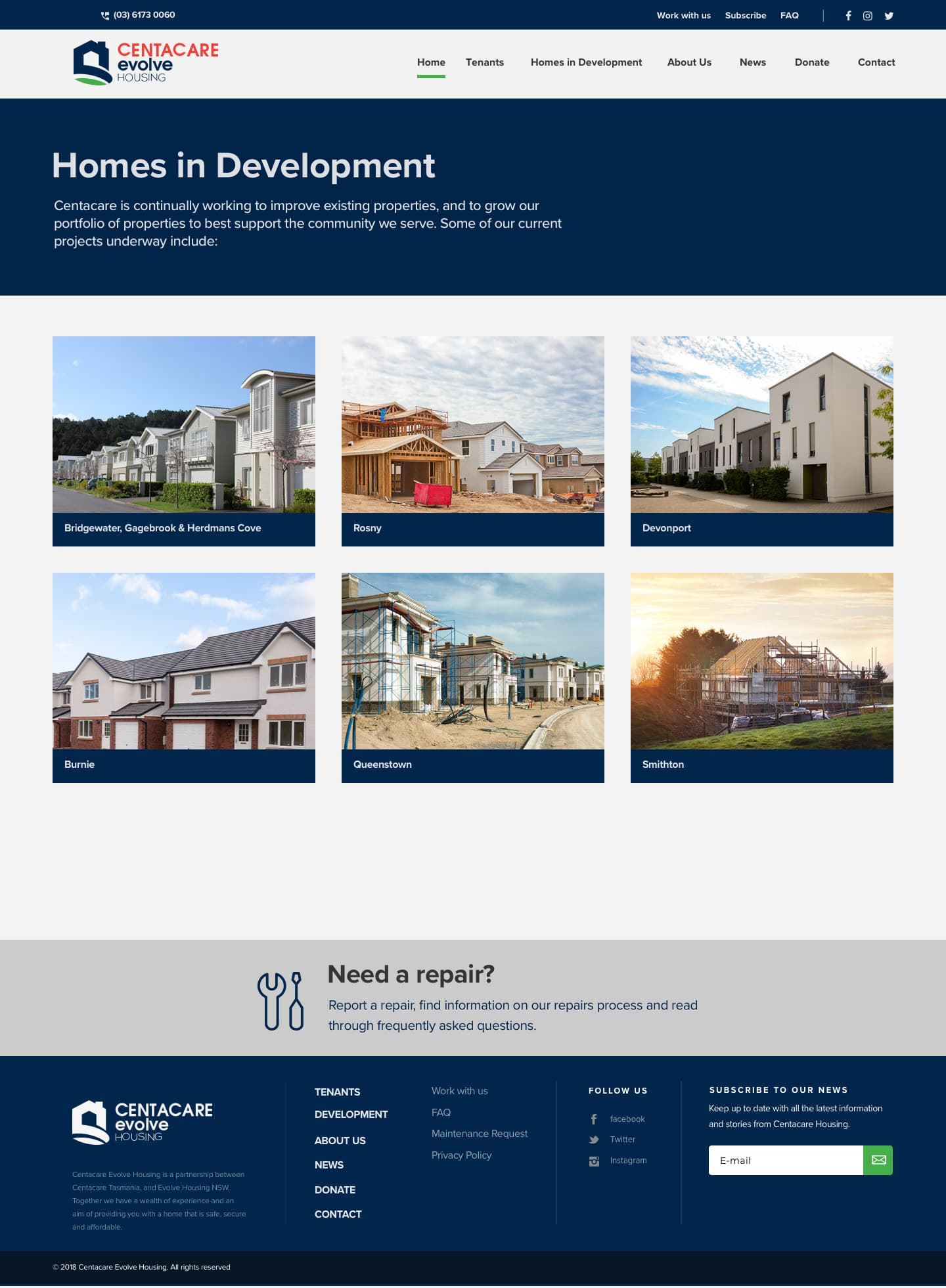
The Homes in Development page, showing a six-card grid of Tasmanian housing projects labelled Bridgewater, Rosny, Devonport, Burnie, Queenstown and Smithton.
Homes in development, listed by town. The repair prompt follows the tenant onto public pages too.

Outcomes

  • Urgent repairs leave the website entirely and reach a 24-hour line

  • Requests arrive carrying the answers needed to classify them, so triage happens at intake

  • Tenancy conditions became searchable and answerable in place, rather than a PDF a tenant had to find and open